


Syllabus: GS2/ Health
Context
- World Mental Health Day is observed annually on October 10.
About
- The day was first initiated in 1992 by the World Federation for Mental Health (WFMH).
- This global observance aims to raise awareness about mental health issues and mobilize efforts in support of mental health care worldwide.
- Theme for 2026: Lived experiences heard: real voices, real change
What is Mental Health?
- Mental health is the state of well-being in which a person can cope with normal stresses of life. It allows one to learn, work well and contribute to the community.
- Good mental health includes emotional, psychological, and social well-being.
- Poor mental health can lead to disorders like anxiety, depression, and other severe disorders, with far-reaching consequences for physical health, relationships, and overall functioning.
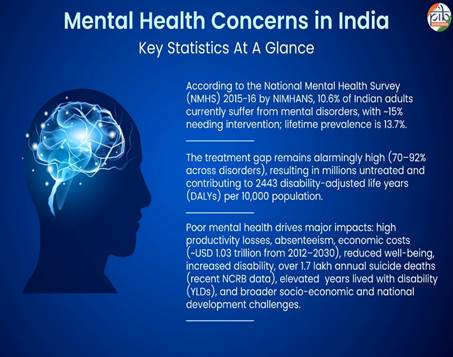
Challenges in Addressing Mental Health Issues in India
- Social stigma: Fear of discrimination and social labelling discourages individuals and families from acknowledging mental health conditions or seeking professional help.
- Low mental health literacy: People fail to recognise symptoms of depression and other common mental disorders, delaying diagnosis and treatment.
- Neglect of elderly people: Loneliness, social isolation and age-related challenges affect mental well-being, while families may mistake symptoms of depression for normal ageing.
- Unequal access to care: Mental health professionals and specialised facilities are concentrated in urban areas, making treatment less accessible to people in rural and underserved regions.
- Misinformation: Unverified claims and misconceptions can discourage people from seeking evidence-based medical care.
Initiatives taken by India
- Tele-MANAS: A 24×7 national tele-mental health helpline to provide free counselling and psychological support, especially crucial during and after the COVID-19 pandemic.
- Integration through Ayushman Bharat and Primary Care: Over 1.75 lakh Sub Health Centres (SHCs) and Primary Health Centres (PHCs) have been upgraded into Ayushman Arogya Mandirs, where mental health services are now part of Comprehensive Primary Health Care.
- National Mental Health Programme (NMHP), 1982: NMHP was launched to tackle the rising burden of mental disorders and the lack of adequate mental health services across India.
- District Mental Health Programme (DMHP): The DMHP intervention was launched in 1996 and later integrated into the National Mental Health Programme (NMHP).
- It is based on Karnataka’s successful ‘Bellary Model’ and focuses on community-based mental healthcare delivery.
- National Mental Healthcare Act, 2017: The Act ensures protecting the dignity and rights of persons with mental illness, and aligning India’s framework with international standards, particularly the United Nations Convention on the Rights of Persons with Disabilities (UNCRPD).
Global Initiatives
- WHO Comprehensive Mental Health Action Plan 2013–2030 seeks to strengthen leadership, community-based services, prevention and mental health information systems.
- WHO Mental Health Gap Action Programme (mhGAP) supports the delivery of evidence-based mental healthcare by non-specialist health workers, particularly in resource-constrained settings.
- Sustainable Development Goal 3.4 calls for the promotion of mental health and well-being and includes reducing premature mortality from non-communicable diseases.
Way Ahead
- Strengthen mental health literacy through school curricula, workplace programmes and public awareness campaigns.
- Expand the mental health workforce through recruitment, training and equitable deployment of specialists and community health workers.
- Improve mental health data through regular national surveys, reliable reporting and research into underserved populations.
Previous article
3rd International Bharat 6G Symposium 2026
Next article
World Cotton Day
